Generator Vs. Battery Backup Systems In Northern Colorado
Both standby generators and lithium battery backup systems solve the same fundamental problem: keeping your home powered, comfortable, and secure when the utility grid goes down.
However, they generate, store, and deliver power in entirely different ways. Choosing the right energy architecture comes down to evaluating your household’s specific power consumption, outage history, and operational expectations.
Across Front Range communities like Wellington, Johnstown, Fort Collins, and Windsor, understanding how these systems compare side by side helps you build an outage protection strategy that fits how your home actually functions.
Side-By-Side System Comparison
| Feature | Standby Generator Backup Lithium Battery Backup |
| Primary Energy Source | Continuous utility natural gas or liquid propane (LP) Stored electricity charged via solar PV or the grid |
| Operating Runtime | Continuous as long as fuel is supplied Limited by stored kilowatt-hour (kWh) capacity |
| Load Capacity | Handles high, continuous 240V loads easily Sized for selected essential circuits or managed loads |
| Transfer Speed | 10 to 20 seconds via Automatic Transfer Switch Instantaneous, within milliseconds |
| Sound & Mechanical | Mechanical engine noise, typically 62 to 67 dBA Completely silent operation with no moving parts |
| Maintenance Needs | Engine oil changes, filters, and weekly exercise cycles Virtually zero routine maintenance required |
| Solar Integration | Operates independently of solar generation Pairs seamlessly with solar PV arrays for daily cycling |
| Primary Application | Whole-home coverage and long multi-day outages Short outage protection, peak shaving, and silent backup |
How Each System Performs Under Real Household Use
Standby Generator Systems
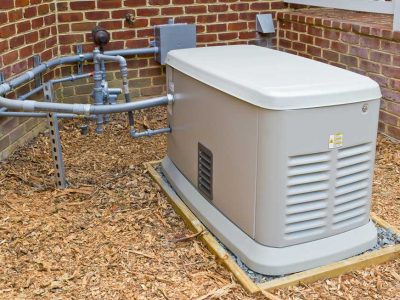
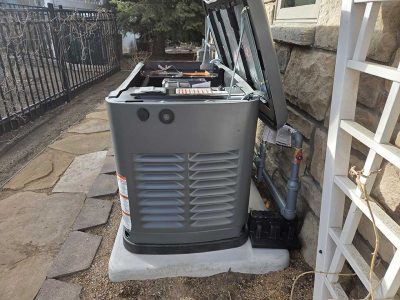
Standby generators are mechanical engine-generator sets permanently installed outdoors on a concrete pad. Connected directly to your municipal natural gas line or on-site liquid propane tank, a generator delivers high-wattage power continuously.
A standby generator is built for:
- Extended Multi-Day Outages: Runs for days or weeks without requiring power rationing as long as gas lines remain open.
- Heavy Continuous 240V Loads: Effortlessly powers high-draw appliances like central air conditioning, well pumps, double ovens, and electric water heaters simultaneously.
- Whole-Home Seamlessness: Keeps the entire primary breaker panel energized so your household operates exactly as it does during normal grid conditions.
Explore standby generator installation through our Backup Generators & Automatic Transfer Switches service page.
Lithium Battery Backup Systems
Home battery storage units, such as chemical lithium iron phosphate systems, are solid-state energy enclosures installed indoors or outdoors. They store grid or solar electricity silently until grid power drops out.
A battery system is built for:
- Instantaneous Zero-Delay Transfer: Swaps to backup power within milliseconds, preventing desktop computers, Wi-Fi routers, TV displays, and digital clocks from rebooting.
- Silent, Emissions-Free Operation: Operates without engine exhaust, mechanical vibration, or noise, making it ideal for tight residential lots or strict HOA noise covenants.
- Essential Circuit Efficiency: Powers high-priority branch lines, such as primary refrigeration, furnace blowers, lighting grids, and communication devices, efficiently without wasting stored energy.
Discover available Battery Backup Systems for residential applications.
Hybrid Architectures Combining Generator And Battery Power
Many Northern Colorado homeowners choose not to limit themselves to an either-or selection. Instead, they install a hybrid power architecture that leverages the unique strengths of both technologies.
In a hybrid system:
- Instantaneous Battery Takeover: When grid power cuts out, the battery bank takes over the load instantly without a single flicker.
- Silent Night-Time Operation: The battery powers essential lighting, refrigeration, and heating controls quietly through the night.
- Automatic Generator Engagement: If heavy appliances, like well pumps or air conditioning units, cycle on, or if the battery charge depletes, the standby generator starts automatically to carry heavy loads and recharge the battery bank.
- Generator Shutdown: Once the battery bank is replenished and heavy loads disengage, the generator shuts off, returning the home to silent battery operation.
Hybrid setups deliver zero-delay response, quiet operation, and indefinite runtime during severe Front Range weather events. Learn how Smart Panels & Load Management can help manage hybrid loads.
Key Factors When Choosing Your System
Determining the ideal setup requires evaluating your property’s infrastructure and daily energy priorities:
- Typical Outage Duration: If your area experiences brief 1- to 4-hour utility blips, a battery system provides seamless coverage. If you live in rural Larimer or Weld County where severe blizzards cause 2- to 5-day blackouts, a generator or hybrid system is necessary.
- Connected Appliance Types: Properties operating high-horsepower electric well pumps, central AC compressors, or hot tubs require high starting wattage, or surge amps, that demand generator capacity or multiple stacked battery modules.
- Solar PV Array Presence: If you already have or plan to install rooftop solar panels, adding a battery system allows you to store daytime solar energy for night-time outage protection.
A master electrician runs accurate load calculations across all your 120V and 240V circuits to determine exact starting and running wattage requirements before equipment selection. Read about capacity planning through Load Calculations & Electrical System Planning.
Related Pages
Explore these related service pages to learn more about home power protection, transfer switches, and load management:
- Backup Power for Homes
- Whole-Home Vs. Partial Backup
- Backup Generators & Automatic Transfer Switches
- Battery Backup Systems
- Smart Panels & Load Management
Frequently Asked Questions
Neither system is universally better. They serve different operational needs. Standby generators excel at supplying continuous high-wattage power over multi-day outages using gas lines. Battery systems excel at instant zero-delay transfer, silent operation, and seamless daily solar storage.
A single battery module can power selected essential circuits. Powering an entire home, including central air conditioning and heavy 240V electric appliances, typically requires stacking two to four battery units or pairing a single battery with a smart load management panel.
Yes. Hybrid setups combine both technologies. The battery handles instant power transfer and runs light loads silently, while the generator turns on automatically only when heavy 240V appliances run or when the battery requires recharging.
Standby generators connected to municipal natural gas lines can run continuously for weeks. Battery systems supply power based on their kilowatt-hour (kWh) capacity, lasting 8 to 24 hours per battery module unless recharged continuously by a rooftop solar PV array or generator.
Yes. Unlike standby generators with internal combustion engines, battery backup systems have no moving mechanical parts or exhaust, operating with complete silence indoors or outdoors.
Standby generators feature internal engines requiring periodic oil changes, air filter replacements, spark plug maintenance, and weekly automatic exercise cycles. Lithium battery systems are solid-state and require virtually no routine physical maintenance.
Yes. Battery backup systems feature internal high-speed solid-state transfer switches that detect grid loss and engage in milliseconds, preventing digital electronics and computers from resetting.
The most common mistake is failing to account for motor starting surge wattage, such as well pumps or AC compressors, resulting in an undersized battery or generator that trips when heavy appliances attempt to start.
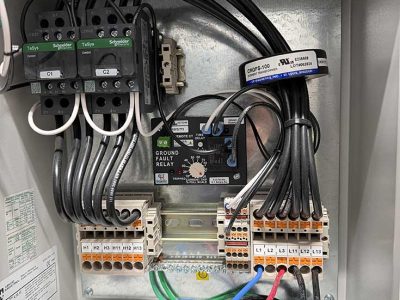
Yes. Adding backup power involves installing an Automatic Transfer Switch (ATS) or an emergency subpanel alongside your main breaker panel. If your existing panel lacks space or proper neutral and ground isolation features, a subpanel addition or service upgrade will be completed during installation.
Yes. Installing standby generators, battery storage units, transfer switches, and high-voltage interconnects requires official electrical and building permits and mandatory inspections from local municipal building departments.
Recent Projects

Schedule Professional Generator & Battery Backup Services
Both generators and battery backup systems solve power loss, but aligning the right technology with your home’s energy needs requires expert system design. At RCI Electric, we analyze your electrical loads, evaluate your outage priorities, and install power systems engineered for absolute Front Range reliability.
Call (970) 294-1208 or fill out our online form to schedule your expert service evaluation today.