
Landscape Lighting Systems for Homes in Northern Colorado
Landscape lighting should make your property easier and safer to use at night, not just look attractive from the street.
When a system is not planned correctly, the flaws are immediately obvious:
- Bright glare in the wrong places
- Dark shadows along paths where you actually walk
- Lights that get dimmer and weaker the further they stretch from the house
In areas around Horsetooth Lake, these issues are especially noticeable. Larger lot sizes, pitch-black surroundings, and uneven terrain mean outdoor lighting needs to function reliably, not just serve as decoration.
What Landscape Lighting Installation Includes
Building an effective landscape lighting setup takes careful planning far beyond simply placing fixtures throughout your yard.
A professional installation includes:
- Custom layout and placement design: Strategic positioning to illuminate pathways, steps, and focal points cleanly.
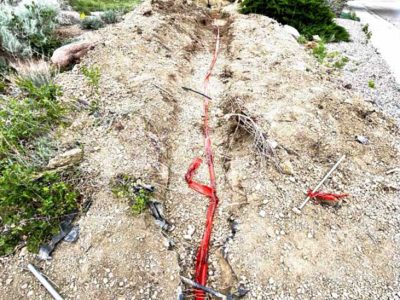
- Low-voltage wiring and trenching: Running underground cable safely beneath sod, flowerbeds, and hardscapes.
- Transformer installation and sizing: Mounting and configuring weather-rated transformers to convert household voltage.
- System balancing for even output: Calculating load distribution so every fixture receives consistent voltage.
- Integration with main electrical: Connecting control systems properly into your home’s electrical system.
The overall goal is complete visual consistency across your entire property. Proper planning also helps prevent future electrical issues caused by overloaded circuits or improperly sized equipment.
Common Landscape Lighting Applications
Landscape lighting setups vary depending on the layout and features of your yard:
- Pathways and Walkways: Provides clear wayfinding light to prevent tripping hazards.
- Gardens and Planting Beds: Highlights trees, shrubbery, and architectural masonry.
- Architectural Features and Trees: Uses uplighting to accent stone walls, pillars, and mature trees.
- Patios and Outdoor Living Spaces: Delivers comfortable ambient light for evening dining and entertaining.
- Driveways and Entry Gates: Marks property boundaries and entry points for vehicles and visitors.
Each area demands different beam angles, fixture heights, and light intensities to work together harmoniously.
Low Voltage Landscape Lighting Systems
Most residential landscape setups operate on low-voltage (12V or 24V) power rather than standard 120V household current.
Key advantages of low-voltage systems include:
- Transformer-based operation: Safely steps down 120V household power to efficient low-voltage levels.
- Lower energy consumption: Works exceptionally well with high-output LED fixtures that use minimal wattage.
- Safer outdoor conditions: Reduces electrical risk around wet soil, gardens, and pets.
- Flexible fixture placement: Allows easier wire routing through landscaping, garden beds, and around trees.
What Goes Wrong
When low-voltage lights look dim, flicker, or show uneven brightness across the yard, the problem can usually be traced back to poor system layout, improper wire sizing, or voltage drop issues.
Layout And Spacing Make The Difference
System layout is what separates a professional landscape lighting installation from a messy DIY project.
A well-designed layout focuses on:
- Correct spacing between fixtures to prevent harsh hot spots
- Balanced illumination across the entire property without dark gaps
- Highlighting key features and focal points without overlighting the space
- Directing light toward the ground and features instead of creating glare into windows
Adding more lights will not fix a poor layout. Too many fixtures can lead to patchy illumination, deep shadows in walking areas, and unnecessary energy use.
Wiring And Voltage Drop Issues
Low-voltage landscape lighting is sensitive to wire distance and electrical resistance.
When running cable across large yards:
- Longer wire runs experience natural electrical resistance, causing voltage drop.
- Undersized wire gauge limits power reaching fixtures at the end of the line.
- Poor underground splices can deteriorate over time, causing intermittent outages.
This is why lights near the house often appear bright while fixtures farther away look dull or orange. Proper electrical planning helps maintain consistent performance throughout the property. Learn more about electrical distribution and wiring considerations with our Wiring Systems And Electrical Distribution services.
Motion And Safety Lighting Integration
Landscape lighting is not just for appearance. It also plays an important role in improving visibility and safety around your property.
For high-risk areas like exterior stairs, dark walkways, and side-yard access points, we often integrate:
- Motion-activated controls: Instantly illuminate dark areas when movement is detected.
- Photocell sensors: Automatically turn lighting zones on at dusk and off at dawn.
- Low-level step and tread lights: Flush-mounted fixtures that illuminate stairs directly.
This improves nighttime visibility, reduces trip hazards, and ensures lights operate only when needed. Discover additional control options with our Motion And Occupancy Sensor Controls solutions.
Real World Problems We Run Into In The Field
Around mountain properties near Horsetooth Lake, longer wire runs and rocky, uneven terrain tend to exaggerate installation mistakes:
- Uneven brightness across expansive yards
- Fixtures scattered randomly without a clear design plan
- Fixtures growing faint at the end of long wire runs
- Waterproof wire connections failing due to soil moisture
- Systems installed without balancing fixture wattage across transformer hubs
Integration With Exterior House Lighting
Landscape lighting works best when it is coordinated with your home’s main exterior lights.
Effective coordination involves:
- Balancing landscape brightness so it complements wall sconces and porch fixtures
- Separating landscape circuits from heavy interior appliances to prevent dimming
- Preventing system overloads by properly sizing transformers and electrical connections
Your house and landscape lighting should work together as a single system, not compete for attention. Read more about coordinating outdoor lighting with our Exterior Lighting Installation services.
When Landscape Lighting Becomes A Larger Project
Installing landscape lighting across extensive acreage or combining multiple outdoor zones can shift the scope from simple accent lighting into full system design:
- Running hundreds of feet of direct-burial cable
- Installing multiple synchronized transformers across separate electrical zones
- Integrating landscape zones with smart home automation platforms
When expanding your outdoor electrical system, review our Load Calculations And Electrical System Planning services to ensure your system can support the added demand.
Related Pages
Explore these related service pages to learn more about outdoor power and lighting solutions:
- Lighting Installation And Upgrades
- Lighting Problems And Troubleshooting
- Outdoor Electrical Equipment
- Smart Lighting Installation
Frequently Asked Questions
Dimness at the end of a lighting run is usually caused by voltage drop. As power travels through a long wire run, resistance reduces the voltage reaching distant fixtures unless the system is properly designed with the correct wire size and layout.
Yes. Low-voltage landscape lighting requires a transformer to convert standard 120V household power into safe 12V or 24V current for outdoor fixtures.
You can add more fixtures only if your transformer has available capacity and your wiring can support the additional load without causing excessive voltage drop.
Uneven brightness is often caused by long wire runs, improper fixture spacing, incorrect transformer loading, or inconsistent fixture wattage throughout the system.
Correcting uneven lighting may require adjusting fixture placement, upgrading wiring, balancing transformer loads, or redesigning zones for better coverage.
Larger landscape lighting systems with multiple transformers may benefit from a dedicated outdoor circuit to prevent overloading existing electrical lines.
Yes. Motion sensors can be integrated into landscape lighting controls to provide additional visibility around pathways, gates, and other areas where lighting is only needed when movement occurs.
A photocell sensor automatically turns landscape lighting on at sunset and off at sunrise, reducing the need for manual adjustments.
Longer distances increase electrical resistance, which can reduce the voltage reaching fixtures and cause dim or inconsistent lighting output.
The most common mistake is installing fixtures without accounting for voltage drop, wire sizing, and overall system design.
Recent Projects



Schedule Professional Landscape Lighting Service
Landscape lighting should highlight your property’s best features and perform reliably across your entire yard. At RCI Electric, we design and install outdoor lighting systems that are properly spaced, correctly wired, and engineered for Northern Colorado conditions.
Call (970) 294-1208 or fill out our online form to schedule your service evaluation today.