EV Charging with Generators & Backup Power Systems for Homes in Northern Colorado
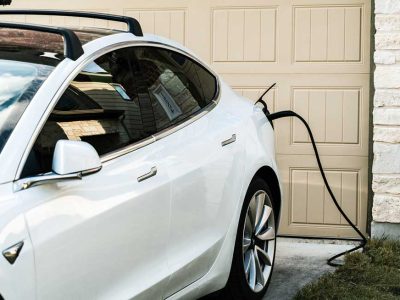
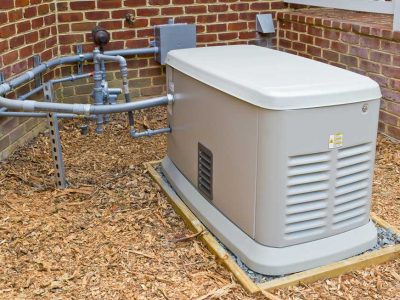
Many homeowners assume that if they have a standby generator, they will easily be able to charge their electric vehicle during a utility power outage. Technically, that is true, a generator produces electricity that can power an EV charger.
What catches people off guard, however, is how quickly system dynamics change once household appliances and an EV charger attempt to run at the same time.
We frequently see setups where a standby generator powers a home perfectly during a storm, right up until the Level 2 EV charger kicks on. When that happens, the generator engine bogs down, large motor loads cycle unpredictably, and the EV charger either throttles its charge rate or shuts down completely.
In smaller agricultural and residential communities like Ault and Eaton, this issue comes up often because homeowners add Level 2 EV chargers onto existing generator systems that were never sized to handle that continuous demand.
What Actually Happens When You Charge on Generator Power
Electric vehicle chargers behave very differently from typical household appliances.
- Continuous High Amperage: An EV charger draws maximum power continuously for hours without cycling off.
- Fixed Generator Output: Generators have a finite kilowatt (kW) capacity and can only supply a specific amount of power at any given moment.
- Competing Load Demands: Essential home systems, like HVAC units, well pumps, and refrigeration, compete directly with the charger for available generator capacity.
When continuous high demand meets a fixed power ceiling, the system has to shed or limit loads to prevent the generator from stalling.
Generator Capacity vs. EV Charger Demand
Sizing is where most operational issues begin. A single Level 2 EV charger can consume a massive portion of a residential generator’s total electrical output.
Typical Residential Generator Outputs
- 10 kW to 14 kW Generators: Very limited EV support; typically requires shedding all other major 240V household loads.
- 18 kW to 24 kW Generators: Moderate capability; can support standard 32A charging alongside basic household essentials if managed properly.
- 30 kW+ Whole-Home Generators: High capability; can support higher-amperage charging (40A to 48A) while simultaneously running central AC and major appliances.
Typical Level 2 EV Charger Loads
A standard Level 2 EV charger draws between 7.2 kW (32A) and 11.5 kW (48A), while higher-output units can draw up to 19.2 kW (80A). Running an 11.5 kW charger on a 20 kW generator leaves less than half the generator’s capacity for the rest of the entire house.
A Real-World Scenario: What Happens Under Load
Imagine a winter storm in Northern Colorado causes a grid outage:
- Your standby generator automatically starts up and takes over the home’s electrical panel.
- The heating system, refrigerator, interior lights, and internet router are all running smoothly and stably.
- An electric vehicle is plugged in, and its Level 2 charger attempts to draw 40 amps (9.6 kW).
- The generator load spikes dramatically. Automatic load management senses the overload risk and immediately sheds or throttles the EV charger circuit.
Nothing failed, and no circuit breaker broke. The generator simply reached its maximum available output and prioritized keeping your home warm and lit over charging your car.
To learn more about calculating power capacity before adding heavy appliances, review Load Calculations & Electrical System Planning.
Load Prioritization and Intelligent Load Shedding
Modern backup generator systems rely on transfer switches and load management modules to assign priority to connected household circuits.
Priority 1: Essential Survival Loads
- Heating systems, furnaces, and heat pumps
- Refrigerators, freezers, and sump pumps
- Lighting circuits and communications equipment
- Medical devices and well pumps
Priority 2: Non-Essential High-Demand Loads
- Level 2 electric vehicle chargers
- Electric clothes dryers and ranges
- Hot tubs, saunas, and secondary AC compressors
During a power outage, transfer equipment automatically deprioritizes or sheds Priority 2 loads whenever total household demand threatens to overwhelm the generator engine.
To see how modern electrical distribution manages complex household circuits, read about Smart Panels & Load Management.
Generator vs. Battery Backup for EV Charging
When evaluating options for backing up an electric vehicle charger, generators and batteries serve different operational roles.
Standby Generators
- Operates as long as fuel (natural gas or liquid propane) is available.
- Handles continuous high-wattage 240V loads significantly better over multi-day outages.
- Represents the most practical backup option for heavy EV charging needs.
Battery Backup Systems
- Limited by stored energy capacity (typically 10 kWh to 15 kWh per battery stack).
- Can be depleted in just two to three hours by a Level 2 EV charger.
- Best reserved for powering essential electronics, lights, and refrigeration during short-duration outages.
To compare energy storage and generator technologies in detail, see Generator vs Battery Backup and Backup Generators & Automatic Transfer Switches.
Hybrid Systems: The Complete Power Solution
For homeowners who want both seamless instant power during brief flickers and heavy-duty capacity during prolonged utility blackouts, combining solar, battery storage, and a standby generator creates an optimal setup.
In a hybrid configuration:
- Battery Storage: Instantly takes over essential circuits during momentary grid flickers without noise or fuel consumption.
- Standby Generator: Automatically kicks in during long-term outages to carry heavy continuous loads, charge the battery bank, and power Level 2 EV charging.
Regional System Considerations
In Fort Collins and Windsor, generator installations tend to perform reliably with EV chargers because systems are usually engineered for continuous high-demand loads during the initial installation. In smaller communities like Ault and Eaton, performance issues surface more often when homeowners add a Level 2 EV charger to an existing generator setup without resizing the generator or installing smart load management modules.
Related Pages
Explore these related service pages to learn more about home generators and EV power distribution:
- EV Charger Installation for Homes in Northern Colorado
- Level 2 EV Charger Installation (240V Home Charging Systems)
- Multi-EV & High-Demand Charging Systems
- Battery Backup Systems
- Load Calculations & Electrical System Planning
Frequently Asked Questions
Yes, but only if your standby generator is sized correctly to handle the charger’s continuous kilowatt draw alongside your home’s baseline electrical loads.
Your automatic transfer switch or smart load module is likely shedding the EV charger circuit. This protects the generator engine from stalling when major appliances like central climate control cycle on.
To charge an electric vehicle at standard Level 2 speeds (7.2 kW to 11.5 kW) while powering central HVAC, refrigeration, and lighting, most homes require a 22 kW to 26 kW standby generator or larger.
Yes. For long-duration outages, a generator is much better suited for EV charging because it supplies continuous high-wattage power as long as fuel is supplied, whereas a battery bank will drain quickly under heavy continuous draw.
Yes, but it requires evaluating your generator’s total capacity and current household load. You may need to add a smart load management module to prioritize circuits or upgrade to a larger generator.
If total household load exceeds output limits, the generator’s internal breaker will trip, automatic load shedding modules will drop non-essential circuits, or the generator engine will bog down and shut down completely.
Charging multiple EVs on generator power requires a large generator system (often 30 kW or higher) paired with smart load-sharing chargers that automatically divide available amperage between vehicles.
A smart load management module is highly recommended. It allows your system to monitor generator output in real time, pausing or throttling the EV charger whenever household appliances demand peak power.
Yes. If your generator system is struggling, you can manually lower the charging amperage through your vehicle’s mobile app or touchscreen interface, reducing the kilowatt draw on your generator.
The most common mistake is assuming an existing generator sized only for basic circuits like lights and refrigerators can handle a continuous 32A or 48A 240V EV charging load without stalling or shedding power.
Recent Projects



Call RCI Electric for EV and Generator Systems in Northern Colorado
Charging an electric vehicle on generator power requires careful load management and accurate system sizing. At RCI Electric, we design backup power configurations that account for real-world continuous demand, balance household circuits properly, and ensure your system works safely when you need it most.
To schedule your service evaluation, call (970) 294-1208 or fill out our online form today.