Backup Power For Homes In Northern Colorado
When the power goes out, the technology sitting in your utility room is not what actually matters. What matters is what still works.
Lights. Refrigeration. Heating or air conditioning. Well pumps. Internet routers. The everyday conveniences and essential safety systems you rely on continuously without a second thought, until they suddenly cut out.
Most homeowners do not evaluate home backup power until an active outage occurs:
- A sudden Front Range winter storm knocks down local distribution lines
- High winds trigger utility public safety power shutoffs
- Extreme summer heat waves strain the regional electrical grid to its breaking point
That is the exact moment you realize what your household truly depends on to function.
Residential backup power is fundamentally about preserving habitability and security. In communities across Greeley, Berthoud, Johnstown, Eaton, and Milliken, outage protection transitions from a luxury upgrade into a vital component of long-term property planning.
What Stays On When Grid Power Drops Out
Engineering a home backup power system starts by identifying the core functional systems required to maintain safety and comfort during an extended blackout:
- Food Preservation & Refrigeration: Keeping primary refrigerators and chest freezers powered continuously to prevent hundreds of dollars in food spoilage.
- Climate Control & Freeze Protection: Powering furnace blowers, boiler circulator pumps, and ductless mini-split heat pumps during sub-zero winter temperatures to prevent frozen, burst water pipes.
- Essential Water & Sanitation: Supplying uninterrupted power to well pumps, sump pumps, and sewage ejectors on acreage properties in rural Weld and Larimer counties.
- Illumination & Path Safety: Maintaining overhead lighting across key hallways, kitchens, staircases, and bathrooms so your home remains safe after dark.
- Communication & Remote Work: Keeping Wi-Fi routers, home security systems, mobile device charging stations, and home office equipment fully operational.
Whether you choose a system designed to run your entire property or one tailored to protect only high-priority branch circuits, the objective remains the same: seamless continuity when grid electricity cuts out. Read about whole-home and partial backup configurations in our Whole-Home vs. Partial Backup guide.
Understanding System Behavior During Grid Interruptions
A primary consideration in backup system engineering is how your home transitions from utility power to backup generation during an active failure.
Key operational factors include:
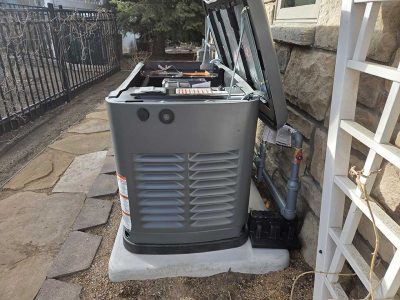
- Transfer Speed: Battery backup systems offer zero-delay, instantaneous transfer (within milliseconds) that prevents computers, TVs, and digital clocks from resetting. Standby generators engage and transfer power within 10 to 20 seconds of line loss via an Automatic Transfer Switch (ATS).
- Load Prioritization: Automatic load management modules continuously monitor total energy consumption, shedding high-draw, non-essential equipment (such as electric hot tubs or clothes dryers) if total demand approaches backup supply limits.
- Run Time & Fuel Availability: Natural gas-fueled standby generators run indefinitely as long as utility gas lines remain active. Home battery banks operate silently on stored kilowatt-hours, recharging daily via connected solar PV arrays or off-peak grid power.
Explore alternative generation options and energy storage technologies:
Critical Load Isolation & Subpanel Distribution
You do not necessarily have to power every single circuit in your main breaker panel to maintain a comfortable, functional living environment during an outage.
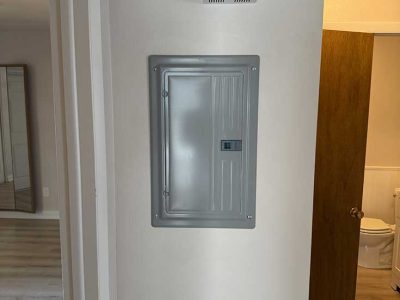
By installing a dedicated critical load subpanel, a master electrician isolates your highest-priority 120V and 240V circuits away from non-essential loads. This allows a smaller, highly efficient backup generator or battery bank to power your essential needs for days at a time without wasting energy or fuel on unoccupied rooms.
Learn how critical branch circuits are isolated and managed through Smart Panels & Load Management and Load Calculations & Electrical System Planning.
Real-World Outage Protection Across Northern Colorado
In more spread-out agricultural and rural areas like Eaton and Milliken, where homes rely directly on electric well pumps for drinking water and sump pumps to manage basement seepage, power loss impacts basic habitability immediately.
When backup power is engineered correctly, you do not scramble for flashlights, run extension cords through windows to portable gas generators, or worry about pipe failures during winter blizzards. Your home detects the utility outage, isolates itself safely from the grid, and continues operating without interruption.
Related Pages
Explore these related service pages to learn more about backup options, smart panel management, and load planning:
- Backup & Alternative Power Systems
- Whole-Home vs. Partial Backup
- Generator vs. Battery Backup
- Smart Panels & Load Management
- Load Calculations & Electrical System Planning
Frequently Asked Questions
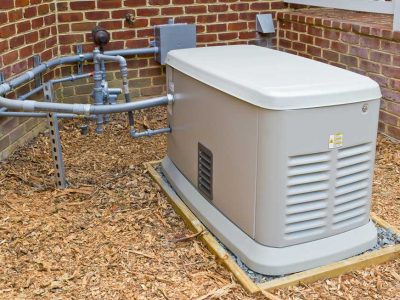
Home backup power is an engineered system, typically consisting of a standby generator, a lithium battery storage bank, or a hybrid combination, that supplies electricity to your property when utility power drops out.
Yes. Whole-home backup setups are sized to carry your entire electrical panel, including heavy 240V loads like central air conditioning and electric ovens. Achieving full whole-home coverage requires a larger standby generator (20kW–26kW+) or multiple paired battery storage units.
Partial backup setups prioritize essential circuits, including primary refrigeration, furnace blowers, well and sump pumps, kitchen convenience outlets, Wi-Fi routers, and interior lighting grids.
Yes. Standby generators and battery backup systems paired with an Automatic Transfer Switch (ATS) constantly monitor grid voltage. When utility power drops, the ATS automatically switches your home’s power source without requiring manual intervention.
Standby generators connected to municipal natural gas lines can run for weeks continuously. Liquid propane (LP) generators run as long as fuel remains in the on-site supply tank. Battery backup systems supply power based on their storage capacity (kWh), typically lasting 8 to 24 hours per battery module before requiring solar or generator recharging.
Portable generators require manual setup, extension cords, outdoor fueling, and manual transfer switches. Permanently installed standby generators operate automatically on natural gas or propane, start within seconds of an outage, and feed power directly into your home’s breaker panel safely.
System design begins by evaluating your essential daily needs during an outage. An electrician runs formal load calculations on your furnace, pumps, refrigeration, and lighting to determine the exact wattage required for safe operation.
Adding backup power requires installing an Automatic Transfer Switch or a critical load subpanel alongside your main panel. If your existing panel lacks physical space or proper neutral/ground isolation features, a panel upgrade or subpanel addition will be necessary.
Yes, provided the battery system is paired with a rooftop solar PV array. The solar panels supply power to your home during daytime hours while simultaneously recharging the battery bank for night-time operation.
The most common mistake is failing to calculate starting surge wattage for motor-driven appliances (like well pumps and air conditioner compressors), resulting in an undersized backup unit that stalls when heavy equipment attempts to start.
Recent Projects


Schedule Professional Home Backup Power Services
Home backup power is not about installing equipment, it is about ensuring your living space remains safe, comfortable, and fully functional when utility power fails. At RCI Electric, we design and install custom backup power systems that match your home’s exact energy profile so you are always prepared for Front Range power outages.
Call (970) 294-1208 or fill out our online form to schedule your expert service evaluation today.