ADU & Detached Living Electrical for Homes in Northern Colorado
Accessory Dwelling Units (ADUs), in-law suites, and detached living spaces are far more than just extra rooms attached to a property. They function as complete, independent living environments.
That means they carry full-time residential electrical demands:
- Full kitchens with cooking, refrigeration, and cleanup appliances
- Independent heating and air conditioning systems running continuously
- Dedicated bathroom circuits, water heating, and laundry units
- Lighting grids and general outlet receptacles used every day
If the underlying electrical distribution is planned improperly, serious power bottlenecks appear as soon as an occupant moves in and begins using the space.
In communities around Greeley, Evans, and Eaton, we frequently troubleshoot issues where detached living structures were built without fully accounting for the substantial continuous load they place on the main home’s electrical service.
What ADU & Detached Living Electrical Includes
Powering a secondary dwelling unit requires comprehensive system design rather than simply extending a single branch wire from the main house.
A complete ADU electrical project includes:
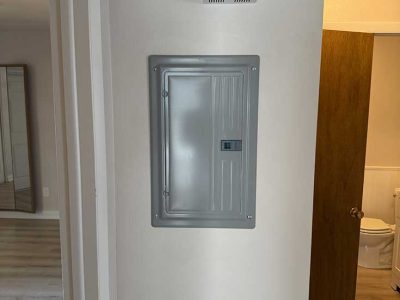
- Circuit Distribution Architecture: Designing a complete subpanel grid for cooking, lighting, HVAC, and general receptacles.
- Feeder Conductor & Subpanel Installation: Sizing and pulling feeder cables safely from the primary service panel to the secondary structure.
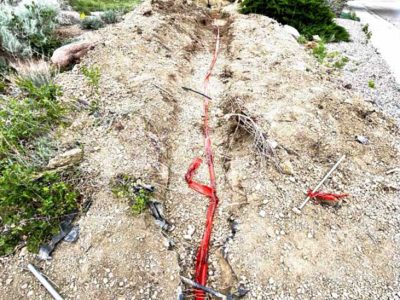
- Underground Trenching and Conduit: Running protected feeder lines through underground conduit to detached buildings.
- Appliance and HVAC Branch Circuits: Installing dedicated 120V and 240V circuits for ranges, mini-split heat pumps, and water heaters.
- Grounding and Bonding Systems: Establishing independent grounding electrode systems at detached structures to meet strict electrical safety codes.
- Load Calculations: Running formal NEC load calculations to verify whether the primary service entrance can absorb the new living area.
The overall goal is ensuring the ADU operates with the power stability and safety of a primary home.
Independent vs. Shared Electrical Systems
There are three primary architectural approaches for delivering electrical service to an ADU:
Shared Subpanel System
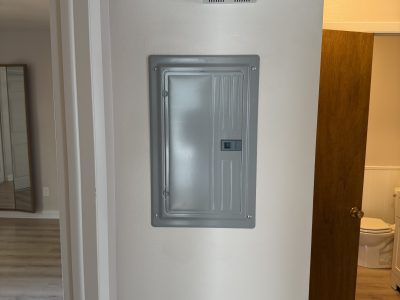
The secondary dwelling connects to a large dedicated double-pole breaker inside the primary home’s main panel. Heavy feeder wires feed a subpanel inside the ADU, where branch circuits are distributed locally. The entire property continues to share a single utility meter and main service entrance.
Semi-Independent Subpanel System
A high-amperage feeder line routes from the primary panel to a dedicated subpanel in the ADU, but incorporates sub-metering equipment. This allows the property owner to track the secondary unit’s exact kilowatt-hour consumption while maintaining a single primary utility account.
Fully Separate Utility Service
A completely independent electrical service entrance, meter enclosure, and main panel are installed for the ADU. The unit receives its own utility account directly from the power company. This configuration is common for standalone rental units or larger detached guest houses.
The ideal setup depends on total calculated load, building separation distance, municipal zoning requirements, and long-term rental plans.
Subpanels and Underground Feeder Systems
The majority of residential ADU builds rely on a heavy-duty subpanel installed inside the secondary dwelling. Power flows directly from the main house service panel, through underground feeder conduit, into the ADU subpanel, and finally out to individual branch circuits.
Key engineering requirements for subpanels include:
- Feeder Sizing: Conductor gauge must be calculated to carry the total connected wattage without overheating.
- Distance and Voltage Drop: Resistance increases over long wire runs between structures. Undersized conductors over long distances cause line voltage drops, leading to dimming lights and motor failures.
- Isolated Neutral and Ground: Inside subpanels, neutral buses must remain completely isolated from ground bars to prevent dangerous stray currents on grounding paths.
Learn more about secondary distribution panels through our Electrical Subpanel Installation services.
Electrical Load Calculations and Service Size
Adding a secondary living unit increases electrical demand significantly. Consider what operates simultaneously in a modern ADU:
- A 240V electric range or induction cooktop (30A–50A)
- A ductless mini-split heat pump system (15A–30A)
- An electric tankless or storage water heater (30A–60A)
- Kitchen small appliance circuits, bathroom GFCI lines, and laundry (40A+)
A standard 100-amp main home panel rarely has the capacity headroom required to power a full ADU alongside the primary residence. Adding an ADU frequently requires upgrading an older main panel to a 200-amp or 400-amp service.
Read more about increasing available electrical capacity through our Electrical Panel Upgrades services.
Running Power to Detached Structures
Feeding a detached ADU requires direct-burial trenching and rigid conduit installation across your yard:
- Trench Depth: Direct-burial PVC or metal conduit must be buried at code-prescribed depths, typically 18 to 24 inches, to protect wires from landscaping, freezing, and ground shifting.
- Conductor Selection: Feeder wires must be rated for wet locations, such as THHN/THWN-2 conductors, inside continuous underground conduit.
- Expansion Joints: Conduit entering above-grade building walls must incorporate expansion fittings to prevent freeze-thaw soil movement from tearing connections apart.
Proper trenching and feeder installation prevent environmental degradation and long-term line failures. See how we evaluate electrical demand through our Load Calculations & Electrical System Planning services.
Grounding & Bonding at Detached Structures
National Electrical Code strictly governs grounding for separate structures served by a feeder line:
- Grounding Electrode System: Detached ADUs require an independent grounding system at the structure, typically consisting of two copper ground rods driven 8 feet deep into the earth.
- Four-Wire Feeder Requirement: Power running to a detached building must consist of four conductors: two hot lines, one neutral line, and one equipment grounding conductor.
- Neutral-Ground Separation: The neutral bus inside the ADU subpanel must remain isolated from the enclosure cabinet, while the equipment ground connects directly to the new local ground rods.
Failing to separate ground and neutral paths in a secondary structure creates serious shock hazards across metallic pipes and building frames. Learn more about correcting grounding issues with our Grounding & Bonding Corrections services.
Real-World Problems We Fix in Northern Colorado
In areas around Evans, Eaton, and Greeley, we frequently correct improper secondary building wiring:
- Detached guest houses connected illegally via thin extension cables or undersized feeder lines
- Subpanels installed with neutrals and grounds bonded together, creating continuous live ground conditions
- Severe voltage drop causing mini-splits and refrigerators in the ADU to freeze or trip breakers
- Undersized main house panels operating past 100% capacity when both structures are occupied
- Feeder cables buried shallowly in dirt without protective conduit
If a secondary living unit is powered without proper electrical design, it will function right up until both homes run their air conditioners, ovens, and showers at the same time.
Related Pages
Explore these related service pages to learn more about secondary power systems and panel upgrades:
- Remodels, Rewires & Additions
- Electrical Subpanel Installation
- Grounding & Bonding Corrections
- Electrical Panel Upgrades
- Load Calculations & Electrical System Planning
- Circuit Upgrades & Expansion
- Outdoor Electrical & Equipment
Frequently Asked Questions
Yes. Installing a subpanel inside the ADU provides localized circuit protection and a main shutoff switch, allowing occupants to reset tripped breakers or turn off power locally without walking to the primary house.
Yes, provided your main panel has adequate amperage headroom and physical breaker space. A master electrician must run a formal load calculation to verify that adding the ADU will not overload the main service entrance.
Installing a separate meter and utility account is recommended if the ADU will be rented long-term to non-family tenants, if local municipal codes require separate utility billing, or if the main house service cannot absorb the additional load.
Underground PVC conduit carrying feeder wires must be buried at least 18 inches deep beneath landscape areas, or 24 inches deep beneath driveways, to meet safety code standards.
Often, yes. Most standard primary homes have 100A or 150A panels. Adding a secondary dwelling with its own kitchen, HVAC, and water heating usually requires upgrading the main service to 200A or 400A.
Voltage drop occurs due to natural electrical resistance over long distances. If feeder conductors are undersized for the distance between buildings, voltage drops, causing dimming lights, motor strain, and appliance shutdowns in the secondary unit.
Yes. National Electrical Code requires any detached building supplied by a subpanel feeder to have its own grounding electrode system connected to the subpanel ground bar.
Yes. Ductless mini-split heat pumps are one of the most efficient heating and cooling solutions for ADUs. They typically require a dedicated 20A or 30A 240V circuit running to the outdoor compressor unit.
The most common mistake is underestimating total appliance load and running undersized feeder wires without establishing proper neutral-ground separation at the secondary subpanel.
Yes. Installing electrical systems for a secondary living unit requires official building and electrical permits, plan reviews, and mandatory rough-in and final inspections from local city or county building departments.
Recent Projects
Schedule Professional ADU & Detached Living Electrical Services
ADUs and detached guest suites are complete residential living environments that demand properly engineered power distribution. At RCI Electric, we design and install ADU electrical systems that are correctly sized, fully code-compliant, and built to deliver stable, long-term power.
Call (970) 294-1208 or fill out our online form to schedule your expert service evaluation today.