Remodels, Rewires & Electrical Additions for Homes in Northern Colorado
Most electrical problems in remodels do not show up during construction, they appear after the drywall is painted, the fixtures are installed, and the family is actually living in the space:
- A newly remodeled kitchen operates fine until the microwave, toaster, and refrigerator compressor run at the exact same moment
- A finished basement looks beautiful but trips breaker panels whenever entertainment equipment and space heaters cycle on
- A room addition feels comfortable until the home’s main electrical panel struggles to supply the extra continuous load
That is the difference between building physical space and building an electrical infrastructure that can handle modern living.
Across projects in Fort Collins, Loveland, Greeley, and surrounding communities in Larimer and Weld counties, the homes that hold up long-term are the ones where electrical distribution was planned as a core part of the remodel, not added as an afterthought behind finished walls.
Remodel & Electrical Upgrade Services
Kitchen Remodel Electrical
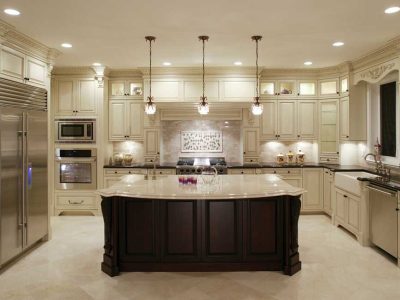
Kitchens represent one of the highest electrical demand zones in any modern home. Successful kitchen projects require dedicated branch circuits for heavy appliances, proper countertop receptacle distribution, layered task and ambient lighting, and strict code compliance with GFCI and AFCI protection.
- Learn More: Read our detailed guide on Kitchen Remodel Electrical Services.
Bathroom Remodel Electrical
Bathroom remodels combine high-draw heating appliances, moisture management, and targeted lighting layout. Upgrades typically involve dedicated 20-amp GFCI-protected circuits, high-efficiency ventilation fans, vanity and shower lighting, and dedicated lines for luxury additions like heated tile floors or bidet seats.
- Learn More: Read our detailed guide on Bathroom Remodel Electrical Services.
Basement Finishing Electrical
Finishing an unfinished basement adds significant living area and real power demand to a home’s distribution grid. This work involves establishing new sub-panels or branch runs, engineering receptacle spacing to code, laying out recessed lighting grids, and powering dedicated media or living zones.
- Learn More: Read our detailed guide on Basement Finishing Electrical Services.
Garage Conversion Electrical
Converting a garage into a bedroom, home gym, or living area requires moving the space from light utility use to full-time residential demand. This involves replacing basic garage circuits, running dedicated lines for secondary HVAC mini-split heat pumps, and bringing outlet spacing up to living-space code standards.
- Learn More: Read our detailed guide on Garage Conversion Electrical Services.
ADU & Detached Living Electrical
Accessory Dwelling Units (ADUs), guest houses, and detached living spaces function as independent residences. They require comprehensive circuit distribution, dedicated subpanels, utility service expansion, and engineered load sharing to operate smoothly alongside the primary home.
- Learn More: Read our detailed guide on ADU & Detached Living Electrical Services.
Home Addition Electrical Wiring
Expanding your home’s square footage vertically or horizontally requires expanding your electrical grid proportionally. We calculate panel headroom, run new branch feeder lines, and ensure new bedrooms, family rooms, or master suites receive stable, dedicated power.
- Learn More: Read our detailed guide on Home Addition Electrical Wiring.
Second Story Additions Electrical
Adding a second story introduces complex structural and distribution changes. Work includes routing vertical power feeders from lower panels, balancing branch loads across multiple floor levels, and integrating new upper-level lighting and HVAC circuits cleanly into existing wiring.
- Learn More: Read our detailed guide on Second Story Additions Electrical.
Rewiring & System Correction
Whole-Home Rewiring
When legacy wiring insulation deteriorates, or when past renovations leave a house with a patchwork of unsafe splices, rebuilding the system is far safer than patching it. Whole-home rewiring replaces outdated conductors, modernizes grounding, and establishes a safe, modern circuit layout.
- Learn More: Read our detailed guide on Whole-Home Rewiring Services.
Aluminum Wiring Replacement & Remediation
Homes built during the 1960s and 1970s with single-strand aluminum branch wiring require professional remediation to eliminate hazardous thermal expansion risks. We provide complete Copalum/Alumiconn crimp remediation, device upgrades, or total branch circuit replacement.
- Learn More: Read our detailed guide on Aluminum Wiring Replacement Services.
Layout Changes & Electrical Modifications
Electrical Relocation & Layout Changes
Reconfiguring wall framing or open floor plans requires moving existing power infrastructure. We safely relocate main switches, move outlet boxes to accommodate new cabinetry or furniture layouts, and adjust lighting placement to fit updated interior designs.
- Learn More: Read our detailed guide on Electrical Relocation & Layout Changes.
Circuit Additions for Remodels
Adding new branch circuits is what allows a remodel to function under real daily use. Installing dedicated lines for appliances, high-draw HVAC equipment, or dedicated workshop circuits prevents nuisance breaker trips and voltage sags.
- Learn More: Read our detailed guide on Circuit Additions for Remodels.
The Importance of Pre-Construction Electrical Planning
The majority of remodel failures happen during the planning stage, long before wires are pulled.
Common planning mistakes include:
- Adding high-draw appliances or new rooms without performing a formal load calculation
- Tying new living spaces into existing general lighting circuits that are already operating near 80% capacity
- Changing room layouts without adjusting switch, outlet, or junction box locations to match
When electrical demand is added without evaluating total system capacity, the result is chronic breaker trips, dimming lights, and limited headroom for future home upgrades.
To understand how home capacity is calculated, review Load Calculations & Electrical System Planning.
Real-World Problems We Fix in the Field
Across Fort Collins, Loveland, and Greeley, we frequently correct improper remodel wiring completed by previous contractors or DIYers:
- Entire basement conversions powered off a single, pre-existing 15-amp garage circuit
- Kitchen countertop outlets lacking required GFCI protection or shared with heavy disposal motors
- Outlets and switches buried inside finished walls without junction box access
- Main service panels overloaded past safe continuous thermal limits due to added square footage
- Ungrounded 2-wire cable extended into new room additions without proper ground paths
When a Remodel Requires a Service Upgrade or Smart Load Control
When a renovation involves multiple rooms, high-draw HVAC equipment, an EV charger, or a swimming pool, the home’s original main panel may reach its physical or amperage capacity limit.
In these situations, expanding your home requires updating your main distribution panel or implementing intelligent energy management to prevent utility overloads.
Learn about panel upgrade options and automated load management: Circuit Upgrades & Expansion and Smart Panels & Load Management.
Related Pages
Explore these related service pages to learn more about home power systems and infrastructure planning:
- Load Calculations & Electrical System Planning
- Circuit Upgrades & Expansion
- Smart Panels & Load Management
- Heating & Environmental Systems
- Shop & Garage Electrical Systems
Frequently Asked Questions
In most cases, yes. Modern building codes require updated GFCI/AFCI protection, dedicated appliance circuits, and specific outlet spacing whenever walls are opened or square footage is added.
If your existing wiring is copper, correctly sized, properly grounded, and in good physical condition, it can often remain. However, outdated knob-and-tube, ungrounded 2-wire, or single-strand aluminum wiring must be updated or remediated.
Yes. National Electrical Code standards require dedicated branch circuits for new bedrooms, bathrooms, kitchens, and living areas to ensure power loads are distributed safely without overloading existing lines.
An electrician must perform a load calculation based on your home’s total square footage, existing continuous appliance draw, and main service amperage (such as 100A, 150A, or 200A) to verify available headroom.
Yes. We routinely relocate outlets, wall switches, and lighting fixtures to align with new framing layouts, kitchen cabinetry designs, or updated furniture placements.
Electrical planning should always occur before drywall installation and framing finalization. Evaluating load requirements early prevents costly mid-project change orders and structural rework.
The most common mistake is adding new living spaces or high-draw appliances onto existing branch circuits without calculating total amperage, leading to chronic breaker trips and voltage sags.
Yes, provided the overall system architecture is planned upfront. Installing an upgraded main panel or subpanel early allows you to connect future room additions or remodels smoothly in later phases.
Generally, yes. Older homes in areas like Fort Collins and Greeley often feature smaller 60A or 100A main services, crowded panel bus bars, and ungrounded wiring that must be modernized to support today’s electrical loads.
The primary goal is creating a safe, code-compliant distribution system that delivers stable, flicker-free power across all living zones, regardless of how many appliances run simultaneously.
Recent Projects



Schedule Professional Remodel Electrical Services with RCI Electric
Remodels and home additions should transform how your living space looks and functions, without creating hidden hazards or power bottlenecks behind your walls. At RCI Electric, we design and install remodel electrical systems that are planned correctly from the start, fully code-compliant, and built to handle real daily use.
Call (970) 294-1208 or fill out our online form to schedule your expert service evaluation today.