Patio, Deck & Outdoor Living Spaces Electrical Services in Northern Colorado
This is where people end up without planning to.
Dinner is over, nobody is in a rush, and instead of heading back inside, everyone just stays out a little longer. Low-voltage lights illuminate the seating area, music plays softly in the background, a ceiling fan creates a gentle breeze overhead, nothing complex, just pure comfort.
That is what a well-designed patio or deck becomes: not just an outdoor feature to admire from a window, but a space your family actually lives in every single day.
It usually starts simple, a single porch light or a basic outdoor outlet. But as you spend more time outside, the vision expands:
- Overhead Comfort & Shade: Ceiling fans keep air moving under covered patios and pergolas, while motorized drop-down screens block the harsh afternoon sun.
- Outdoor Media & Entertainment: Weatherproof TVs and integrated sound systems allow you to watch the game or host movie nights without stepping back inside.
- Strategic Receptacle Outlets: Outlets built directly into deck railings, masonry pillars, and seating walls eliminate dangerous extension cords.
- Layered Ambient & Safety Lighting: Step riser lights, post cap illumination, and dimmable string lights ensure the space remains safe and inviting after dark.
- Substructure & Detached Gazebos: Power routed to detached pavilions, fire pit lounges, and outdoor bars brings the entire yard together into one cohesive living area.
When built for real daily use, your outdoor living space functions as a seamless extension of your home’s interior. In communities across Fort Collins, Loveland, Berthoud, and Windsor, these spaces quickly become the most popular rooms in the house.
What Outdoor Living Space Electrical Work Includes
Powering a patio or deck requires coordinating low-voltage aesthetic lighting with high-voltage appliance circuits across outdoor surfaces.
A complete outdoor living electrical installation includes:
- Concealed Deck & Masonry Wiring: Routing cables discreetly beneath deck boards, inside hollow pergola posts, or through stone walls before hardscaping is sealed.
- Dedicated TV & Media Outlets: Installing recessed, weatherproof receptacles behind wall-mounted outdoor displays to hide all power and audio cabling.
- Overhead Fan & Heater Controls: Wiring multi-speed wall switches, dimmers, and timers inside weatherproof junction boxes.
- GFCI Protection & Weatherproofing: Outfitting every receptacle with mandatory Ground Fault Circuit Interrupters and extra-duty “while-in-use” covers.
- Long-Run Feeder Infrastructure: Installing subpanels or upsized underground conduit to feed detached pavilions and gazebos far from the main panel.
Every device and fixture must be planned for ease of use so you never have to scramble for extension cords or reset disengaged breakers. Learn about custom receptacle configurations: Specialty Outlet Systems.
Strategic Outlet Placement: No More Extension Cords
The most common issue with builder-grade patio setups is poor outlet placement. A single outlet positioned near the back sliding door forces homeowners to run extension cords across walking paths whenever they want to plug in laptop chargers, festive string lights, or portable griddles.
During deck and patio installations, we position outlets where you actually need them:
- Flush-mounted inside composite deck floor boxes near seating groupings
- Built directly into outdoor bar islands and prep counters
- Integrated into stone masonry pillars and pergola posts
- Mounted high along patio eaves for seasonal lighting and holiday displays
Proper outlet placement improves convenience while eliminating unsightly tripping hazards across your outdoor living area.
Comfort, Shade, and Outdoor Media Systems
Modern covered decks and pavilions feature many of the same electronic amenities found in indoor living rooms.
Connecting outdoor media displays, high-output ceiling fans, and high-wattage electric infrared heaters to a single indoor circuit will quickly overload the line.
We separate convenience electronics from high-draw climate control devices, ensuring your TV and speakers receive clean, unswitched power while heaters run on dedicated 240V branch lines. Discover how layered lighting enhances outdoor living: Outdoor Lighting Systems Installation.
Evaluating Total Household Load & Panel Capacity
Adding multiple features, such as electric infrared patio heaters (2,000W to 6,000W each), outdoor bars, and motorized pergolas, to your patio setup increases your home’s baseline electrical demand.
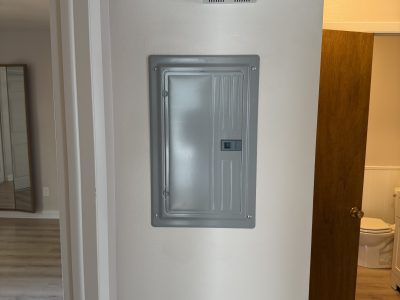
Before pulling wires, a master electrician performs a formal load calculation to determine if your main panel can absorb the added current. If your panel is physically full or lacks continuous capacity, we install a dedicated subpanel near the patio or upgrade your main electrical service.
Read about calculating system capacity and line upgrades: Load Calculations & Electrical System Planning and Dedicated Circuit Installation.
Related Pages
Explore these related service pages to learn more about outdoor power, dedicated lines, and system capacity:
- Outdoor Electrical & Equipment
- Dedicated Circuit Installation
- Load Calculations & Electrical System Planning
- Specialty Outlet Systems
- Outdoor Lighting Systems Installation
Frequently Asked Questions
While small lighting runs and a couple of convenience outlets can share capacity, heavier loads, such as infrared patio heaters, outdoor kitchen refrigeration, and media setups, require dedicated branch circuits to operate safely without tripping breakers.
It depends on the current load on that line. Tapping new outlets into a circuit that already feeds garage tools or security lighting can cause overload trips. An electrician must verify existing amperage before adding new receptacles.
Yes. Outdoor TVs require weather-protected outlets installed inside extra-duty enclosures. Outlets should be positioned directly behind the TV wall mount to conceal power cables and protect connections from driving rain and snow.
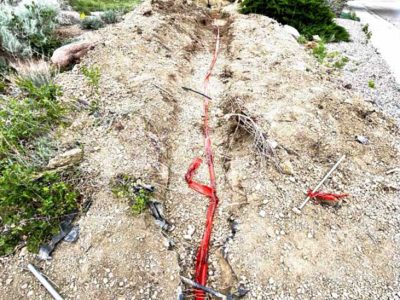
Wires are enclosed inside rigid Schedule 40 PVC conduit or wet-location rated UF-B cable, stapled securely along joist undersides, and routed through structural posts before deck boards are laid.
Yes. Patio ceiling fans must be explicitly wet-rated or damp-rated (UL listed for outdoor use) and mounted to heavy-duty, outdoor-rated fan junction boxes supported directly by structural framing.
Rainwater or high ambient humidity penetrating non-weatherproof outlets, worn extension cords, or unsealed junction boxes triggers the sensitive ground fault (GFCI) safety mechanism, cutting power to prevent electrical shocks.
An outdoor subpanel consolidates all patio, deck, lighting, and heater breakers in one convenient location near your outdoor living space, eliminating long wire runs back to the basement panel and preventing voltage drops.
Small 1,500-watt plug-in heaters can run on standard 120V outlets, but larger commercial-grade infrared heaters (3,000W to 6,000W+) require dedicated 208V/240V circuits to deliver adequate heat effectively.
All exposed wiring running along walls, down posts, or near ground level must be enclosed inside Schedule 40 or Schedule 80 PVC conduit or rigid metal pipe to prevent physical damage.
The most common mistake is piecemeal additions, adding lights, fans, and outlets one by one onto a single shared circuit using unsealed junction boxes and indoor-rated extension cords.
Recent Projects

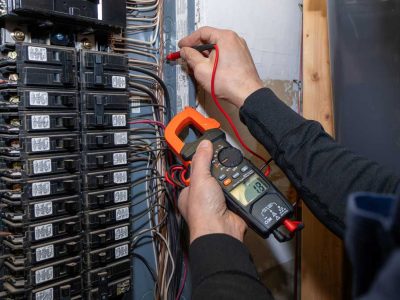
Schedule Professional Patio & Deck Electrical Services
Your outdoor living space should function effortlessly so you can relax without dealing with tripped breakers or messy extension cords. At RCI Electric, we design and install outdoor electrical systems that are correctly sized, safely weatherproofed, and built to support how you actually live.
Call (970) 294-1208 or fill out our online form to schedule your expert service evaluation today.