Why Do My Lights Flicker Or Dim? Electrical Causes And System Issues In Homes In Northern Colorado
Flickering or dimming lights usually show up in distinct, repeatable patterns:
- They dip momentarily whenever major equipment or central heating turns on
- They flicker at specific times of the day
- They act differently depending on what other appliances are running in the house
That pattern is not random, it is your home’s electrical system reacting to real-time power demand.
In homes around Severance, Loveland, and Fort Collins, flickering lights almost always trace back to how branch circuits, wire conductors, and total electrical load interact under real-world conditions, rather than a defect inside the light bulb itself.
Lighting Issue Vs. Electrical System Problem
Most homeowners assume a flickering light fixture is simply a bad bulb or a loose socket. While that is sometimes true, flickering is far more frequently a symptom of a deeper system-level constraint:
- Branch circuits operating under heavy continuous load
- Wiring connection instability behind switches or junction boxes
- Main electrical panel capacity limits being reached
- Imbalanced power distribution across the hot legs of your main service
The lighting fixture is merely where the underlying electrical problem becomes visible, not where the problem starts.
What Is Actually Happening
Light fixtures, especially modern LED bulbs and drivers, depend on a steady, precise supply of voltage and consistent current.
When power stability shifts:
- Lights flicker or pulse rapidly
- Brightness drops suddenly under load
- Light output becomes erratic and inconsistent
The light bulb is not failing, the electrical power feeding it is changing.
Common Causes Of Flickering Or Dimming Lights
Load Changes Most Common Cause
- Central HVAC compressors, heat pumps, or furnace blowers starting up
- Heavy kitchen appliances or electric clothes dryers cycling on
- Multiple power-hungry devices running simultaneously
When heavy motor loads start, they draw a brief surge of inrush current that temporarily drops available line voltage across shared lines, exposing system limitations. Read about how we isolate branch line issues with Circuit Troubleshooting & Load Issues.
Circuit Overload
- Too many light fixtures tied onto a single branch circuit
- Lighting circuits improperly shared with high-demand outlet loads
- Circuits operating near their maximum continuous amperage capacity
Circuits that seemed fine for light intermittent use start struggling as everyday household electrical demand increases.
Loose Or Failing Connections
- Wire nut connections loosening over time due to thermal expansion and contraction
- Wall switches or light fixture terminals not torqued securely
- Connections heating up and expanding under continuous current draw
Loose wiring creates high resistance along the circuit line, resulting in unstable power delivery and erratic lighting behavior. Explore how wiring integrity impacts power flow with Wiring Systems & Electrical Distribution.
Voltage Drop
- Extremely long wire runs from the main breaker panel to distant rooms or outbuildings
- Undersized copper wire conductors carrying high current
- Reduced operating voltage reaching light fixtures under heavy load
Lights dim noticeably because the underlying wire gauge cannot deliver full, stable voltage over the distance.
Dimmer And Control Compatibility Issues
- Incompatible wall dimmer switches paired with modern LED bulbs or drivers
- Failing mechanical or electronic switch contacts
- Incorrect wiring on multi-location 3-way dimmer setups
Not all flickering is caused by wire failures, sometimes the wall control system itself is incompatible with the light fixture. Learn more about Basic Devices & Switching Systems.
Flickering Under Load: What It Looks Like
Flickering under load follows a predictable pattern:
- Lights pulse or dip the exact moment central AC units or space heaters turn on
- Room brightness drops noticeably when an electric oven or clothes dryer operates
- Lighting becomes unstable during peak evening hours when family power consumption spikes
This is a classic load interaction issue rather than a defective fixture.
Whole-Home Vs. Isolated Flickering
Isolating where flickering occurs helps pinpoint the root cause:
Single Fixture Or Single Room
If flickering is isolated to one lamp or one bedroom, it is likely a localized wiring issue, a failing wall switch, or a loose wire connection inside that specific junction box.
Multiple Rooms Or Whole-Home Flickering
If lights flicker across multiple rooms, entire floors, or the whole house simultaneously, you are dealing with a system-wide issue:
- Main panel bus bar or main breaker connections loosening
- An imbalanced neutral conductor line from the utility service entrance
- Main utility service panel capacity limitations
The more areas affected across your floor plan, the more likely the issue is tied directly to your overall electrical distribution system.
Where These Problems Usually Start
In homes across Northern Colorado, lighting instability typically originates from:
- Multiple rooms and hallway outlets tied onto a single crowded circuit
- Shared branch lines where lighting and high-amperage wall outlets mix
- Older electrical panels built for legacy power demands struggling under modern electronic loads
- Previous wiring modifications made without evaluating total continuous demand
- Imbalanced load distribution across the two 120V hot legs in the breaker panel
Electrical Causes Beyond The Light Fixture
Some causes require specialized diagnostic equipment to detect:
- Loose service entrance neutral wires affecting voltage stability across phases
- Shared neutral connections on multi-wire branch circuits causing signal cross-talk
- Severe voltage drop over undersized wire runs
- Corrosion or thermal stress on panel bus bars and breaker mounting clips
- Significant phase imbalances caused by heavy 120V loads placed on one side of the panel
These are not visible defects, they require professional system-level diagnostics to locate and resolve safely.
What We Check When Diagnosing Lighting Instability
At RCI Electric, we do not assume a flickering light is just a bad fixture. We follow the entire power path from the utility meter to the bulb socket.
System-Level Diagnostics
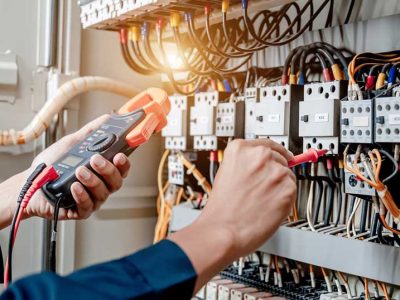
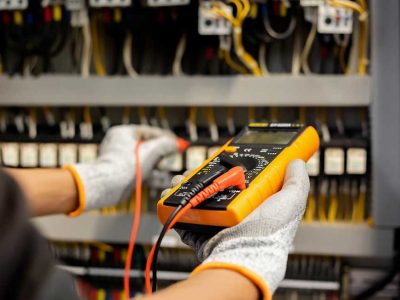
We inspect incoming utility service capacity, evaluate main panel bus bar health, measure voltage stability across both hot legs under load, and assess overall system demand. Read how we calculate total panel capacity with Load Calculations & Electrical System Planning.
Circuit-Level Inspection
We test double-pole and single-pole breaker conditions, evaluate circuit amperage draw under peak usage, check wire conductor sizes, and inspect neutral lines.
Load Interaction Testing
We monitor line voltage while major home equipment cycles on, test high-demand motor loads, and identify improperly shared branch circuits.
Connection Point Verification
We inspect wall switch terminals, check junction box wire nuts for proper torque, and test fixture socket connections for signs of thermal arcing or loose contact.
Real-World Problems We Fix In Northern Colorado
In homes around Fort Collins, Loveland, Berthoud, and Windsor, we regularly resolve complex lighting issues:
- Lights that flicker or dip every time the central air conditioner or well pump starts up
- Branch circuits overloaded over years of adding new light fixtures and wall outlets
- Loose neutral connections inside aging panels causing wide voltage swings
- Lights tied into heavy garage or kitchen appliance lines
- Modern LED recessed lights flickering due to legacy incandescent dimmers
When Flickering Indicates A Severe System Hazard
While an occasional subtle dim can be normal, frequent or severe flickering warrants immediate professional attention:
- Flickering occurs frequently throughout the day across multiple rooms
- Multiple circuits show signs of voltage drop simultaneously
- Circuit breakers trip or feel unusually hot to the touch while lights flicker
- Lights dim significantly and stay dim for extended periods while appliances run
At that point, resolving the issue requires correcting the electrical infrastructure rather than simply changing light bulbs or replacing wall switches.
Related Pages
Explore these related pages to learn more about lighting performance and circuit troubleshooting:
- Electrical Problems & Troubleshooting
- Lighting Installation & Upgrades
- Lighting Problems & Troubleshooting
- Why Is My Lighting Causing Breaker Trips?
- Why Your Breaker Keeps Tripping
- Basic Devices & Switching Systems
Frequently Asked Questions
Lights usually flicker due to sudden household load changes, such as an AC unit turning on, loose wiring connections inside wall boxes, incompatible dimmers, or overloaded branch circuits.
It can be. While some minor dimming from motor startups is normal, frequent or severe flickering caused by loose wire connections or arcing inside junction boxes poses a genuine electrical fire risk.
When large appliances or motor loads start up, they draw a momentary surge of electrical current. If your circuits are undersized or shared with lighting, this sudden draw temporarily drops line voltage to the lights.
Yes. Older dimmer switches designed for incandescent bulbs are incompatible with modern LED drivers. Using an incompatible dimmer causes rapid flickering, buzzing, or premature bulb failure.
Not always. If flickering is isolated to one room, fixing a loose wire or splitting a circuit is usually enough. However, if flickering occurs house-wide under load, an upgraded panel or service entrance may be required. Learn more about Electrical Panel Upgrades and when electrical systems require additional capacity.
Flickering at specific times often aligns with peak household energy use, such as evenings when HVAC units, cooking appliances, and electronics operate simultaneously.
Yes. Aging, corroded, or loose wire connections increase electrical resistance along the circuit line, which reduces voltage and causes lights to dim under load.
Whole-house or multi-room flickering points to a system-level issue, such as a loose main panel neutral wire, an overloaded main breaker, or an issue with incoming utility power lines.
Recent Projects


Schedule Professional Electrical Diagnostics With RCI Electric
Flickering or dimming lights are rarely random, they are your electrical system’s way of reacting to load bottlenecks and wiring instability. At RCI Electric, we diagnose lighting issues at both the circuit and system levels so the problem is corrected safely and permanently.
Call (970) 294-1208 or fill out our online form to schedule your service evaluation today.