Why Are My Lights Not Working? No Power, Intermittent Lighting & Electrical Issues in Homes in Northern Colorado
When lights stop working, it is usually not a random event, and it is rarely just a burnt-out light bulb.
Sometimes the issue is obvious. Other times, it is completely confusing:
- One light fixture is out, but the rest of the room works fine
- Half of the room has power, while the other half goes dark
- Everything was working normally yesterday, and suddenly nothing turns on
In homes around Milliken, Platteville, and La Salle, this situation almost always comes down to where the power failure is occurring along the electrical chain, rather than a defect inside the light fixture itself.
What Is Actually Happening
For a light to turn on and illuminate a space, a complete, uninterrupted power path must be maintained:
- Power supplied safely from the main electrical panel
- A functioning, properly sized branch circuit
- A working wall switch or control device
- A sound, properly wired light fixture
If any single link in that power delivery chain breaks, the light will not turn on. Read about how we troubleshoot branch line failures: Circuit Troubleshooting & Load Issues.
Common Causes of Lights Not Working
Tripped Circuit Breaker
- A double-pole or single-pole breaker shut off due to an electrical overload or short circuit
- “Partial” trips where the breaker handle appears on but internal contacts have opened
- Breakers tripping repeatedly under normal continuous load
Failed Wall Switch
- Mechanical failure inside aging wall switches
- Loose wire connections behind the switch box
- Incorrect 3-way or 4-way switch wiring preventing circuit completion
Learn more about basic devices and wall controls: Basic Devices & Switching Systems.
Light Fixture Failure
- Internal driver or socket failure within integrated LED fixtures
- Damaged or worn fixture components
- Compatibility issues between dimmers and electronic drivers
Wiring Problems
- Loose or disconnected wire nuts inside ceiling junction boxes
- Damaged copper conductors behind walls
- Poor, oxidized wire connections failing over time
Explore how receptacle and wire connections fail along a line: Outlet Problems & Failures.
Branch Circuit Issues
- Shared lighting and outlet circuits causing system instability
- Overloaded circuits carrying too many appliances
- Severe voltage drop preventing sufficient power from reaching the fixture
Evaluating The Scope: One Light vs. Multiple Lights
Identifying how many fixtures are affected helps pinpoint where the electrical break is located along the line:
Single Light or Single Room Affected
This points to a localized failure. The problem is typically isolated to a bad light bulb, a failing wall switch, a loose wire nut inside that specific fixture’s junction box, or a localized branch line splice.
Multiple Lights or Multiple Rooms Affected
This indicates a circuit-level issue. The failure is likely caused by a tripped breaker in the main panel, an open neutral wire in an upstream junction box, or damaged wire along a shared branch circuit line.
Entire Home or Large Living Areas Dark
This points to a main panel or service-level problem. It often involves a tripped main breaker, a failed bus bar connection, or an incoming utility service line failure.
The broader the outage area across your floor plan, the higher up the electrical chain the problem exists.
Intermittent Lighting: Lights That Work Sometimes
Few things are more frustrating than lights that turn on and off unpredictably.
What It Looks Like
- A light fixture turns on and off randomly throughout the day
- Lights work properly in the morning but fail in the evening
- Lighting cuts out whenever another appliance or motor turns on
Common Causes
Intermittent operation points to loose wire nut connections expanding under heat, failing wall switch contacts, or voltage sags caused by heavy motor loads on shared circuits. Loose connections are an active fire hazard and should be diagnosed promptly.
What We Check When Diagnosing Lighting Outages
At RCI Electric, we follow the complete power path to isolate the true cause of a lighting failure.
System-Level Verification
We inspect the main electrical panel condition, verify service capacity, test main neutral connections, and evaluate overall system stability.
Circuit-Level Testing
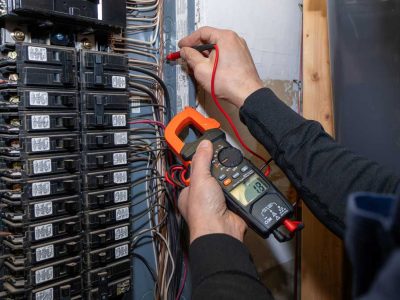
We verify breaker status, test for tripped conditions, measure voltage at key junction points, and check wire conductor integrity across the line.
Switch and Fixture Inspection
We test mechanical switch operation, inspect internal fixture components, verify proper wire torque, and check for signs of thermal damage.
Load Interaction Review
We evaluate what other equipment operates on the same circuit, test high-demand appliance cycles, and check for shared circuit overloads.
Real-World Problems We Fix in Northern Colorado
In towns like Platteville, La Salle, and Milliken, we frequently resolve lighting outages caused by aging or modified wiring:
- Lights tied onto crowded outlet circuits that fail when appliances cycle on
- Loose wire connections inside ceiling junction boxes causing intermittent blackouts
- Legacy wall switches failing after years of daily mechanical use
- Modern LED fixtures installed on legacy wiring without proper grounding or neutrals
- Branch circuits that were never designed to handle added lighting loads
In rural and agricultural areas across Northern Colorado, lighting failures often show up after past DIY updates added new lights onto existing lines without adjusting circuit capacity.
When A Lighting Outage Indicates A Major Infrastructure Issue
If your lights stop working alongside other electrical symptoms, simple troubleshooting is no longer enough:
- Multiple lighting circuits go dark simultaneously without tripping breakers
- Breakers trip repeatedly immediately after being reset
- Lights fail under normal continuous load while wall switches feel warm
- You notice burning odors or buzzing sounds near switch boxes or the breaker panel
At that point, resolving the issue requires professional panel or circuit repairs rather than simply replacing light fixtures. Explore your options for Breaker Replacement & Electrical Panel Repairs.
Related Pages
Explore these related service pages to learn more about home lighting performance and circuit diagnostics:
- Lighting Installation & Upgrades
- Lighting Problems & Troubleshooting
- Why Is My Lighting Causing Breaker Trips?
Frequently Asked Questions
A sudden lighting outage is usually caused by a tripped circuit breaker, an open neutral connection in a junction box, a burnt-out bulb, or a sudden failure inside the wall switch.
If lights across multiple rooms go out at once, the problem is likely a tripped breaker. If only one fixture or one room is dark while other devices on the circuit still work, the issue is typically the wall switch or fixture wiring.
Yes. Over time, internal mechanical contacts inside wall switches wear out, corrode, or loosen, breaking the circuit path and preventing power from reaching the fixture.
Yes. Loose wire nuts or loose terminal screws expand and contract as electric current flows. This causes wires to lose physical contact intermittently, resulting in random light shutoffs.
This usually points to a failed bulb, a loose wire connection at a specific fixture’s junction box, or a broken feed wire running between the individual lights along the line.
Yes. In residential wiring, circuits are often daisy-chained from one box to another. A loose wire connection in an upstream switch box can cut power to every light downstream on that circuit.
You can try resetting the breaker once. If it trips again immediately, do not force it held on. Repeated tripping indicates a short circuit, ground fault, or severe overload that requires professional repair.
If your lights are wired onto a shared circuit with wall outlets, running high-wattage appliances can overload the circuit breaker or cause severe voltage sags that shut down sensitive LED drivers.
Yes. Older panels with corroded bus bars, loose main lug connections, or failing breakers often fail to deliver steady voltage, causing widespread lighting outages across the house.
The most common causes are tripped circuit breakers, loose wire nut connections in ceiling boxes, and failed mechanical wall switches.
Recent Projects

Schedule Professional Lighting Diagnostics With RCI Electric
If your lights are not working, the underlying issue is usually somewhere in the power delivery system, not just a bad fixture. At RCI Electric, we diagnose lighting problems at the circuit, switch, and system levels so the true root cause gets fixed correctly the first time.
Call (970) 294-1208 or fill out our online form to schedule your expert service evaluation today.