Level 2 EV Charger Installation for Homes in Northern Colorado
For most electric vehicle owners, charging speed is not the real issue. Consistency is. A system that charges fast one night but slows down, trips breakers, or limits output the next is not actually working, even if the charger hardware itself is rated for higher performance.
Level 2 charging is where those system bottlenecks show up. Because Level 2 systems operate for hours at a time, any weakness in circuit design, load balance, or available electrical capacity becomes obvious under daily use. In areas like Windsor and Firestone, proper engineering makes the difference between a charging setup that works reliably every night and one that constantly runs into power limits.
What Level 2 Charging Really Demands
Level 2 systems push your home’s electrical infrastructure differently than almost any other appliance.
Key performance demands include:
- Long Continuous Runtime: Pulling continuous current uninterrupted for 3 to 8 hours overnight.
- Higher Sustained Amperage: Drawing continuous loads typically ranging from 16A up to 48A.
- Repeated Daily Duty Cycles: Operating every single night under heavy thermal load.
- Overlap with Major Household Loads: Running simultaneously with central climate control, water heaters, and refrigeration.
Level 2 charging is not just a high-power load. It is extended continuous time under load.
Why Performance Breaks Down Under Real World Use
Level 2 charging setups rarely fail the minute they are installed. They typically work during initial testing but struggle once daily household routines resume.
Common real-world failure patterns include:
- Vehicle charging speeds drop unexpectedly when central air conditioning cycles on.
- Double-pole breakers trip after 2 or 3 hours of continuous overnight charging.
- Vehicle onboard computers throttle power draw due to voltage drop over long cable runs.
The Real World Headroom Challenge
Consider a scenario where a Level 2 charger is installed in a garage connected to a panel that technically has two open breaker slots. On paper, the installation looks fine. However, once real usage starts overnight, the EV charger pulls heavy continuous power while the home’s HVAC unit cycles and an electric clothes dryer runs.
After a few hours, heat builds up inside the panel box, the breaker trips, or the vehicle reduces its charge rate. Nothing is broken. The electrical system simply lacks the headroom to handle all high-demand loads simultaneously.
What Charging Performance Depends On
Actual charging output is determined by the weakest link in your electrical infrastructure, not the manufacturer rating on the charger box alone.
Charging performance depends on:
- Circuit Amperage Rating: Matching physical wire size to desired charging rates.
- Breaker Sizing and Bus Capacity: Ensuring the panel can dissipate heat built up over long runs.
- Available System Capacity: Verifying total utility service capacity of 100A, 200A, or 400A.
- Simultaneous Electrical Load: Managing total household power consumption during charging hours.
Typical Real World Output Expectations
- 20A to 30A Circuits: Delivers approximately 16A to 24A continuous charging, adding 12 to 20 miles of range per hour. Best suited for lower-demand daily setups.
- 40A to 50A Circuits: Delivers approximately 32A to 40A continuous charging, adding 25 to 35 miles of range per hour. The standard setup for modern residential installations.
- 60A+ Dedicated Circuits: Delivers up to 48A continuous charging, adding 40+ miles of range per hour. Required for high-demand, long-range electric vehicles.
To learn more about dedicated branch line requirements, review our EV Charger Circuits services.
What We Evaluate Before Installation
At RCI Electric, we evaluate your complete power infrastructure before mounting any hardware.
System Capacity Review
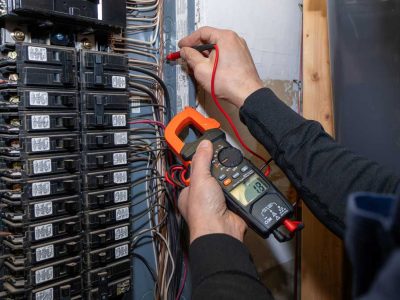
We evaluate your main panel rating, measure available physical slot space, and calculate your home’s total baseline load against incoming utility service limits.
Circuit Engineering
We verify double-pole breaker selection, select correct copper conductor wire gauges (#6 AWG or #4 AWG), calculate run distances, and mitigate potential voltage drop over distance.
Load Interactions and Future Planning
We evaluate how your EV charger will interact with HVAC compressors, electric ranges, water heaters, and hot tubs. We also account for potential future electric vehicle additions. Read more about our calculation process through Load Calculations and Electrical System Planning.
Continuous Load Behavior and Thermal Design
National Electrical Code (NEC) standards strictly classify Level 2 EV charging as a continuous load operating for 3 hours or more.
Key design requirements:
- The 80% Rule: Overcurrent protection devices and conductors can only be loaded up to 80% of their maximum rated capacity. For example, a 50A breaker allows a maximum continuous charge rate of 40A.
- Heavy Conductor Sizing: Branch wires must be sized at 125% of the charger’s continuous output to prevent thermal insulation breakdown.
- Torque Specifications: Connection terminals at the breaker and wall receptacle must be torqued precisely to prevent localized heat accumulation.
Hardwired vs Plug In Level 2 Chargers
Choosing between a hardwired Level 2 unit and a NEMA plug-in receptacle is a design decision based on usage requirements.
Hardwired Installations
Hardwired connections support higher continuous amperage, including up to 48A charging on a 60A breaker. They provide a more stable long-term connection, eliminate receptacle failure points, and are ideal for outdoor or high-demand daily charging.
Plug In Installations NEMA 14 50 Outlets
Plug-in setups offer flexibility for replacing or relocating the charger unit. However, they are capped by safety standards at 40A continuous charging on a 50A breaker and require commercial-grade receptacles paired with GFCI breaker protection.
When Level 2 Installation Requires a Broader Upgrade
In many homes across Northern Colorado, attempting to install a Level 2 charger exposes existing infrastructure limitations:
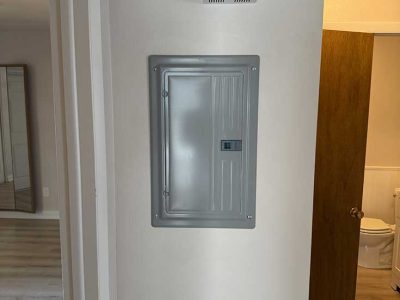
- Panel Capacity Limits: The main panel is operating near maximum thermal capacity or lacks physical slot space.
- Simultaneous Load Conflicts: Running your EV charger alongside HVAC units, water heaters, and dryers creates continuous main overload conditions.
- Sustained Demand Breakdown: Systems that handle brief power spikes fine begin failing under long-duration continuous loads.
When your service panel cannot support an added continuous load, explore our options for Electrical Panel Upgrades and Electrical Service Upgrades 100A 200A 400A.
Multi EV Charging Considerations
Adding a second electric vehicle to a household changes how power must be managed across your panel.
- Unmanaged simultaneous charging can easily overload standard 200-amp main services.
- Smart load management devices or dual-port power sharing chargers allow two vehicles to share a single branch circuit safely.
To manage power distribution intelligently, read about Smart Panels and Load Management.
Regional System Performance
Across Windsor and Firestone, properly designed Level 2 systems handle heavy daily use without issue. In Johnstown and Dacono, system limitations tend to show up when Level 2 chargers are added to panels already running near capacity, especially during peak evening hours when household power usage is highest.
Related Pages
Explore these related service pages to learn more about home charging and power distribution:
- EV Charger Installation for Homes in Northern Colorado
- Level 2 EV Charger Installation
- EV Charger Circuits
- 240V and High Demand Circuits
- Smart Panels and Load Management
- Circuit Upgrades and Expansion
Frequently Asked Questions
A Level 2 EV charger is a 240V charging system that charges electric vehicles significantly faster than a standard 120V Level 1 wall outlet, adding 20 to 40+ miles of range per hour.
Charging speed depends on the circuit amperage, vehicle battery capacity, and onboard charging limits. Most Level 2 home setups fully recharge an electric vehicle overnight in 4 to 8 hours.
Yes. National Electrical Code standards strictly require Level 2 EV chargers to be installed on an isolated, dedicated branch circuit with no other appliances or outlets connected.
Breaker size depends on the charger output rating. Common setups include a 40A breaker for 32A charging, a 50A breaker for 40A charging, or a 60A breaker for 48A hardwired charging.
Whether your panel can support Level 2 charging depends on available physical slot space, panel bus bar condition, and your home’s total calculated electrical load. A professional load calculation will confirm available headroom.
Hardwiring supports higher continuous charge rates, eliminates mechanical outlet wear, provides weather resistance, and removes the need for expensive GFCI breakers in many setups.
Thermal accumulation causes delayed tripping. Continuous high current generates heat inside an aging, undersized, or loose breaker, triggering its internal thermal protection mechanism.
Yes. Installing multiple chargers requires careful load planning, which can be accomplished using dual-port power-sharing chargers, smart load management devices, or dedicated separate branch circuits.
Not always. While homes with older 100-amp panels often require a service upgrade, homes with 200-amp panels can typically support Level 2 charging unless total household demand is already high.
A standard residential Level 2 charger installation typically takes between 2 and 4 hours once site evaluations, permits, and load calculations are complete.
Recent Projects

Call RCI Electric For Level 2 EV Charger Installation
Level 2 charging is not just about speed, it is about long-term reliability and system safety. At RCI Electric, we evaluate your complete power supply, design dedicated continuous circuits, and install Level 2 setups that perform consistently day after day.
Ready to install a Level 2 charger in your home? Call (970) 294-1208 or fill out our online form to schedule your expert service evaluation today.