
Furniture And Built-In Power Systems For Homes In Northern Colorado
Standard wall outlets assume that room layouts revolve entirely around perimeter walls.
However, modern interior architecture is defined by custom millwork, floating desks, kitchen appliance garages, expansive media walls, and built-in cabinetry. When custom carpentry is installed over existing drywall, perimeter wall outlets can become buried, inaccessible, or blocked behind cabinet backs.
Furniture and built-in power systems bring electrical access directly into the woodwork itself.
By integrating code-compliant junction boxes, flush-mounted receptacles, and concealed cable routing into custom millwork, electrical power follows the room’s true functional layout, delivering clean, accessible electricity exactly where you work, cook, or relax.
Where Built-In Power Transforms Modern Interiors
Integrated millwork power delivers high-value functionality across key architectural areas:
- Executive Home Office Desks And Built-Ins: Supplying flush desktop power, USB-C high-wattage charging, and cable pass-throughs directly into custom desktop surfaces without trailing cords down to floor outlets.
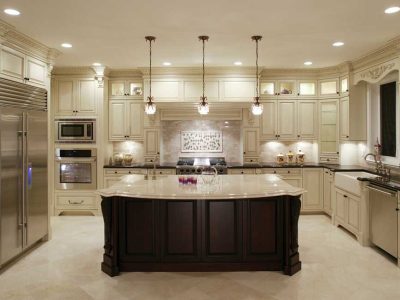
- Kitchen Appliance Garages: Housing hidden 20A GFCI-protected receptacles inside appliance cabinets to operate coffee makers, mixers, and blenders out of sight.
- Custom Media Walls And Entertainment Centers: Integrating recessed power and low-voltage cable management behind cabinetry to power AV receivers, gaming consoles, and streaming equipment.
- Built-In Banquettes And Reading Nooks: Installing discreet power outlets on bench risers or side panels for charging phones and powering accent lamps.
- Floating Vanity Drawers And Cabinetry: Supplying code-compliant in-drawer power for hair dryers, curling irons, and electric toothbrushes while keeping bathroom counters clutter-free.
In custom home builds, basement finishing projects, and primary remodels across Loveland, Fort Collins, and surrounding Front Range communities, built-in power systems keep high-end millwork functional and hazard-free.
Types Of Built-In Power Configurations
Selecting the correct integrated outlet technology depends on the cabinetry material, depth, and daily functional requirements.
Flush-Mounted Cabinet And Surface Outlets
- Description: Low-profile receptacles installed directly through precision cutouts in cabinet face frames, end panels, or wood desktops.
- Application: Ideal for built-in office desks, kitchen island end panels, and living room shelving units where a clean, seamless finish is required.
In-Drawer Power Outlets
- Description: Specialized outlet assemblies installed inside moveable cabinet drawers, featuring ETL-listed flexible cable management arms and automatic safety shut-off switches.
- Application: Widely used in bathroom vanity drawers and kitchen command centers to charge devices or power hot hair-styling tools safely out of sight.
Hidden Appliance Garage Receptacles
- Description: Receptacles installed flush along the interior back wall of enclosed millwork cabinets.
- Application: Designed specifically for dedicated appliance garages, allowing coffee bars and appliances to stay plugged in while keeping main kitchen counters completely clear.
Concealed Channel And Raceway Systems
- Description: Slim, continuous multi-outlet tracks mounted under open shelving or along internal cabinet soffits.
- Application: Supplying continuous, hidden power for display lighting transformers, audio components, or workspace accent lighting without disrupting wood finishes.
National Electrical Code Standards For Furniture Millwork
Wiring electrical devices inside combustible wood cabinetry and moveable furniture requires careful attention to National Electrical Code safety standards:
- UL And ETL Listed Assemblies For Furniture Use: Receptacles installed in or on furniture and cabinetry must utilize wiring methods and box assemblies explicitly approved for millwork mounting. Standard plastic wall switch boxes cannot simply be loosely attached inside cabinet walls.
- In-Drawer Automatic Safety Cut-Off Switches: Where required by the specific listed assembly and application, in-drawer electrical receptacles should incorporate appropriate safety controls that cut power when the drawer is closed, helping prevent high-heat appliances from creating thermal hazards inside enclosed drawers.
- Flexible Wiring Methods And Armored Cable: Wiring routed through cabinet bases or behind moveable drawers must be appropriately protected to prevent cabinet drawers and sliding hardware from pinching or abrading wire insulation.
- Class A GFCI Protection In Kitchens And Baths: Built-in outlets installed inside kitchen appliance garages, island cabinetry, or bathroom vanities must receive appropriate GFCI protection where required to reduce shock hazards near water sources.
Critical Early Planning And Carpenter Coordination
Integrating electrical power into custom woodwork cannot be treated as an afterthought once cabinets are painted and installed. Flawless execution requires close coordination between electricians and custom cabinetmakers:
- Pre-Build Cabinet Shop Coordination: Providing cabinetmakers with exact rough-in dimensions for junction boxes, conduit access holes, and faceplate cutouts before millwork is fabricated in the shop.
- Junction Box And Framing Depth Verification: Ensuring internal cabinet framing or drawer slides leave sufficient depth behind the cabinet face for junction box enclosures without interfering with drawer travel.
- Rough-In Cable Positioning: Locating wall wire feeds precisely where cabinet backs will sit so cables can be routed cleanly into cabinet chase spaces during trim installation.
Read more about specialty outlet systems, electrical relocation and layout changes, and patio, deck, and outdoor living spaces electrical.
Related Pages
Explore these related service pages to learn more about specialty outlets, layout changes, and outdoor electrical systems:
- Specialty Outlet Systems
- Switches And Dimmers Installation
- Basic Devices And Switching Systems
- Electrical Relocation And Layout Changes
- Patio, Deck, And Outdoor Living Spaces Electrical
Frequently Asked Questions
Yes, provided the receptacle is housed inside a properly listed junction or device box that is securely attached to the cabinet structure and installed in accordance with applicable National Electrical Code requirements.
Yes, when a listed in-drawer outlet system appropriate for the application is installed according to its manufacturer’s requirements and applicable electrical codes. Specialized systems can incorporate safety controls designed for use inside drawers.
Electricians route appropriately protected wiring through designated chase channels created behind cabinet backs, ensuring wires are protected from cabinet mounting screws, drawers, and structural hardware.
Yes. Installing a flush 20A GFCI-protected outlet inside an appliance garage allows coffee makers, blenders, and other countertop appliances to remain plugged in and ready for use while staying concealed behind cabinet doors.
Yes. High-output USB-C Power Delivery modules can be flush-mounted directly into wooden desk surfaces or custom office shelving, providing convenient charging for compatible laptops, tablets, and other devices without desktop clutter.
Receptacles installed in kitchen areas must receive GFCI protection where required by the applicable electrical code. The specific installation and location determine the required protection method.
Yes. An electrician can often route appropriately protected wiring from an accessible basement, crawl space, or adjacent electrical location into existing cabinet bases, then create precision openings for listed device boxes and receptacles.
A surface pop-up remains hidden beneath a countertop or desktop until pressed, raising a tower of outlets. A flush cabinet outlet is permanently installed flat against the cabinet face frame or panel.
Moveable drawers and articulated furniture components require wiring methods or flexible cord assemblies specifically rated and approved for the movement involved. The appropriate method depends on the furniture design and the specific installation.
Adding new branch circuits, running wiring through millwork, or hardwiring fixed furniture junction boxes may require electrical permits and inspections from the applicable local building department.
Recent Projects




Schedule Professional Built-In Power Services
Furniture and built-in power systems are not about adding random outlets. They are about placing clean, functional power exactly where your furniture and millwork demand it. At RCI Electric, we design and install custom integrated power systems that fit cleanly into your cabinetry, meet applicable safety requirements, and perform reliably for years to come.
Call (970) 294-1208 or fill out our online form to schedule your expert service evaluation today.