Advanced Dimming Systems For Homes In Northern Colorado
Lighting should not be constrained to a binary choice between fully bright and completely dark.
When overhead illumination operates only at 100% capacity, living spaces can feel harsh, washed out, and rigid. A kitchen island requiring bright, focused task lighting during meal preparation can become an uninviting glare during evening gatherings. Similarly, a primary bathroom needs functional morning lighting but benefits from softer, low-glare illumination during late-night visits.
Advanced dimming systems adjust line voltage, phase timing, and low-voltage control signals to deliver smooth, flicker-free light regulation across a broad range of output levels.
By matching dimming protocols to specific LED fixture drivers, advanced dimming systems can eliminate buzzing, improve low-end performance, and give you greater control over your home’s visual atmosphere.
Where Advanced Dimming Transforms Living Spaces
Precision dimming creates adaptable, multi-functional environments across every room in your home:
- Kitchens & Open Islands: Shifting seamlessly from high-output task illumination during food preparation to warm, ambient lighting during evening dining.
- Great Rooms & Living Spaces: Lowering recessed downlights for movie nights while maintaining soft illumination on artwork or architectural features.
- Primary Suites & Bedrooms: Establishing soft, relaxing light levels that reduce harsh morning glare and create a more comfortable nighttime environment.
- Dining Rooms & Entertainment Areas: Dialing in precise, low-level lighting to create an inviting atmosphere for hosting guests and holiday dinners.
- Bathrooms & Powder Rooms: Supplying bright vanity lighting for morning grooming while reducing illumination to comfortable levels during evening use.
In custom home builds, basement finishing projects, and primary remodels across Loveland, Fort Collins, and surrounding Front Range communities, advanced dimming systems bring flexibility to residential lighting.
Types Of Advanced Dimming Systems
Selecting the correct dimming technology requires matching the wall controller to the specific electrical protocol required by your LED fixtures, transformers, and drivers.
Reverse-Phase And ELV Dimmers
Reverse-phase or electronic low-voltage dimmers use trailing-edge control to provide smoother operation with compatible electronic LED drivers and transformers. They are commonly used with modern LED fixtures, integrated LED downlights, and electronic transformers where quiet, consistent low-end dimming is important.
Forward-Phase And MLV Dimmers
Forward-phase or magnetic low-voltage dimmers use leading-edge control and are designed for compatible magnetic transformers and other inductive loads. They can be appropriate for magnetic low-voltage accent lighting, landscape lighting transformers, and certain legacy fixture installations.
0-10V Architectural Low-Voltage Dimmers
A 0-10V dimming system uses a separate low-voltage control signal between the wall control and LED driver. This approach is commonly found in architectural lighting applications and fixtures designed for precise, linear dimming control.
Multi-Load And Multi-Zone Preset Dimmers
Advanced wall keypads can control multiple independent lighting circuits from one location. This allows recessed lights, pendants, under-cabinet fixtures, and accent lighting to operate as coordinated zones that can be adjusted individually or recalled through programmed lighting scenes.
Technical Considerations For LED Compatibility, Flicker And Buzzing
One of the most common frustrations with modern LED dimming is a mismatch between the wall dimmer and the internal LED driver rather than a problem with the electrical wiring itself.
Key technical factors for reliable dimming include:
- Reducing LED Buzz And Pop-On: An incompatible dimmer can cause electronic components within an LED fixture or driver to vibrate or respond inconsistently to changes in the electrical waveform. A properly matched dimmer can provide smoother transitions and quieter operation.
- Adjustable Low-End Trim: Quality LED dimmers may include physical or digital low-end trim adjustments. These allow the dimmer to be calibrated to the lowest stable operating level, reducing flickering or premature shutoff near the bottom of the dimming range.
- Minimum Load Requirements: Older dimmers were often designed around higher-wattage incandescent loads. Modern LED fixtures use substantially less power, so older controls may flicker, flash, or fail to operate correctly. Modern LED-compatible dimmers are designed to work with much lower loads.
If lighting continues to flicker, dim unexpectedly, or cause breaker issues, professional electrical troubleshooting services can help determine whether the issue involves the dimmer, fixture, wiring, or circuit.
Industry-Leading Hardware Manufacturers
Dimmer circuitry, compatibility, and control precision influence how smoothly a lighting system performs over time. We specify quality hardware from leading manufacturers:
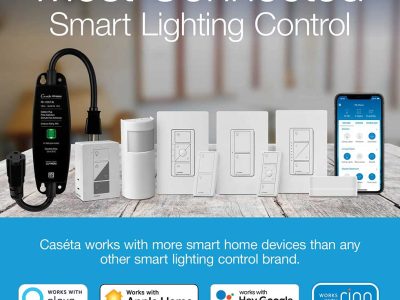
- Lutron: Offers advanced dimming and lighting control systems across its Maestro, Caséta, RadioRA, and architectural product families.
- Leviton: Provides digital slide dimmers, universal dimmers, smart controls, and LED-compatible wall switches.
- Legrand: Offers design-focused dimmers with touch controls, universal dimming capabilities, and screwless wallplates.
- Eaton And Cooper: Provides residential and commercial dimming controls designed for a range of compatible lighting applications.
Read more about switching systems, lighting upgrades, and remodel electrical services:
- Switches And Dimmers
- Whole-Home Lighting Upgrades
- Kitchen Remodel Electrical Services
- Bathroom Remodel Electrical Services
- Accent And Feature Lighting Installation
Related Pages
Explore these related service pages to learn more about switching systems, lighting upgrades, and remodel electrical services:
- Switches And Dimmers
- Whole-Home Lighting Upgrades
- Kitchen Remodel Electrical Services
- Bathroom Remodel Electrical Services
- Accent And Feature Lighting Installation
Frequently Asked Questions
LED flickering can occur when an older incandescent dimmer or incompatible control is paired with modern LED drivers. Upgrading to a compatible LED dimmer can restore smoother and more consistent operation.
Forward-phase dimmers adjust the beginning portion of the AC waveform and are commonly used with compatible incandescent and magnetic loads. Reverse-phase dimmers adjust the trailing portion of the waveform and are often better suited to compatible electronic LED drivers.
Buzzing can occur when an LED driver responds poorly to an incompatible dimming waveform. Installing a properly matched dimmer can reduce electrical noise and provide quieter operation.
Low-end trim is a calibration feature that establishes the lowest stable output level for a lighting load. Proper adjustment can help prevent flickering, flashing, or lights turning off before reaching the bottom of the dimmer range.
No. Fixtures designed for 0-10V control require a compatible 0-10V dimming system that sends a separate low-voltage control signal to the fixture’s LED driver.
Some LED dimmers can operate without a neutral wire, while certain high-performance, electronic, and smart controls require one. The wiring requirements depend on the specific dimmer and lighting system.
Yes. Multi-location dimming systems can allow one lighting circuit to be controlled from multiple wall locations using compatible master and companion controls.
The number depends on the dimmer’s rated LED load and the total wattage of the connected fixtures. The manufacturer’s load rating should always be followed when determining how many fixtures can share one control.
Tru-universal dimming refers to controls designed to support multiple compatible lighting load types, such as incandescent, halogen, magnetic low-voltage, electronic low-voltage, and LED loads. The specific supported loads depend on the manufacturer’s specifications.
Replacing an existing wall switch with a compatible dimmer may not require a permit in every situation. However, installing new 0-10V control wiring, adding lighting circuits, or modifying existing electrical infrastructure may require permits and inspections based on local requirements.
Recent Projects




Schedule Professional Advanced Dimming Services
Advanced dimming systems are not just about lowering light levels. They help create versatile, comfortable, and energy-conscious living spaces tailored to your daily routines. At RCI Electric, we install properly matched, high-performance dimming controls that improve lighting performance and give you greater control over your home’s atmosphere.
Call (970) 294-1208 or fill out our online form to schedule your expert service evaluation today.